Inclusion of Refugees and Internally Displaced Persons in TVET and Employment in Ethiopia: Key Findings and Recommendations
Mohas Consult, in collaboration with GIZ, has conducted a comprehensive assessment titled “Legal Assessment on the Inclusion of Refugees, Internally Displaced Persons (IDPs), and Host Communities in TVET and Employment Systems in Ethiopia.” The study aimed to evaluate the current status and practices of inclusion in Technical and Vocational Education and Training (TVET) and employment systems, and to provide actionable recommendations to enhance equitable access.
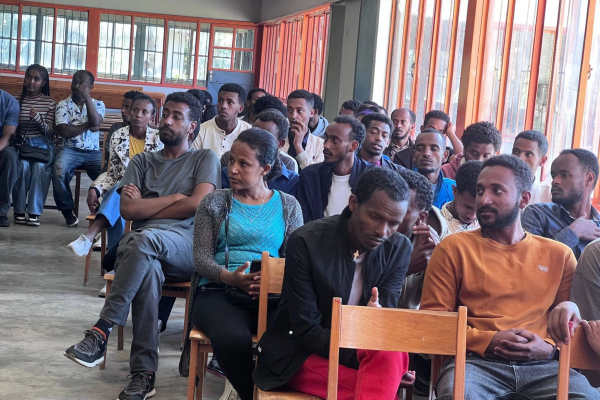
The assessment reviewed national and regional laws, policies, and directives governing access to TVET and employment, and was informed by consultations across Addis Ababa, Somali, Benishangul-Gumuz, and Tigray regions. The study examined both policy frameworks and their application in practice, identifying key gaps and opportunities for improvement.
Key Focus Areas:
- Practical access to skills development and employment for refugees, IDPs, and host communities
- Gaps between policy intent and on-the-ground implementation
- Institutional and coordination challenges affecting inclusion
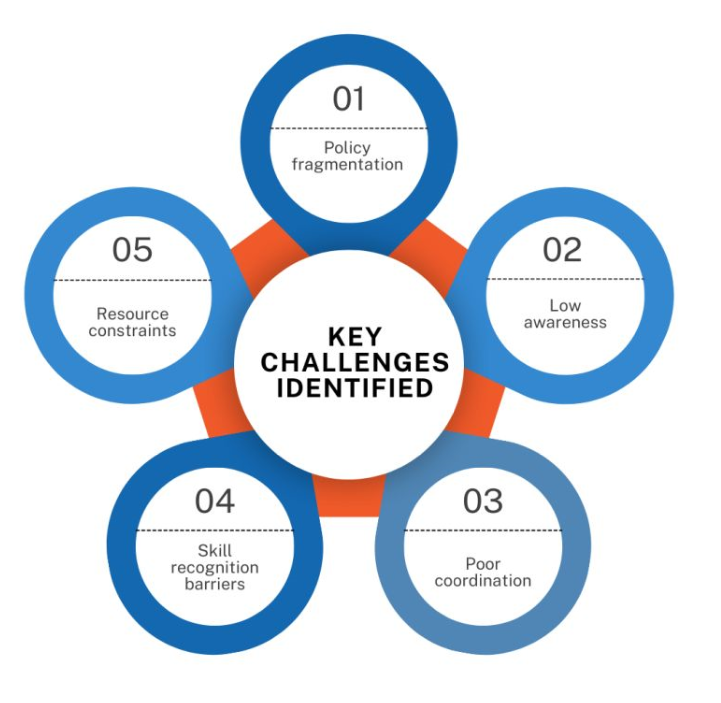
Key Challenges Identified:
- Fragmented legal and policy frameworks leading to inconsistent access to TVET and employment
- Limited awareness of rights and procedures among displaced populations and institutions
- Weak coordination among stakeholders, resulting in inefficiencies
- Barriers to recognition of prior learning and informal skills
- Limited resources for inclusive TVET programming
Key Recommendations:
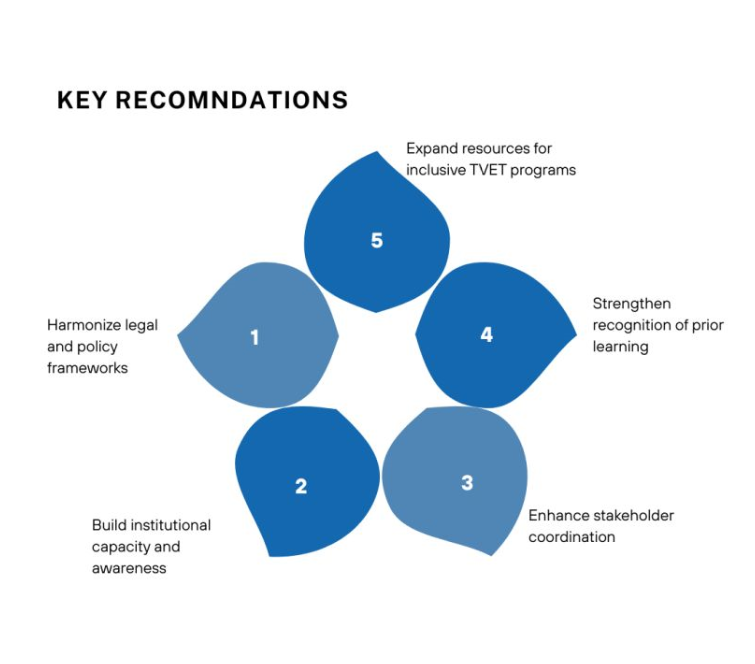
- Harmonize legal and policy frameworks to ensure equitable access for all groups
- Strengthen institutional capacity and awareness for inclusive implementation of TVET and employment programs
- Enhance stakeholder coordination to improve service delivery and reduce gaps
- Promote recognition of prior learning and informal skills to facilitate integration into formal systems
- Mobilize resources to expand and sustain inclusive TVET and employment initiatives
This assessment underscores the critical importance of inclusive, evidence-based approaches to skills development and employment as foundational elements for sustainable socio-economic inclusion. By addressing legal, institutional, and operational gaps, Ethiopia can strengthen equitable access to education and employment opportunities for displaced populations and host communities alike.